AI Agents vs Traditional Automation: What's the Difference?
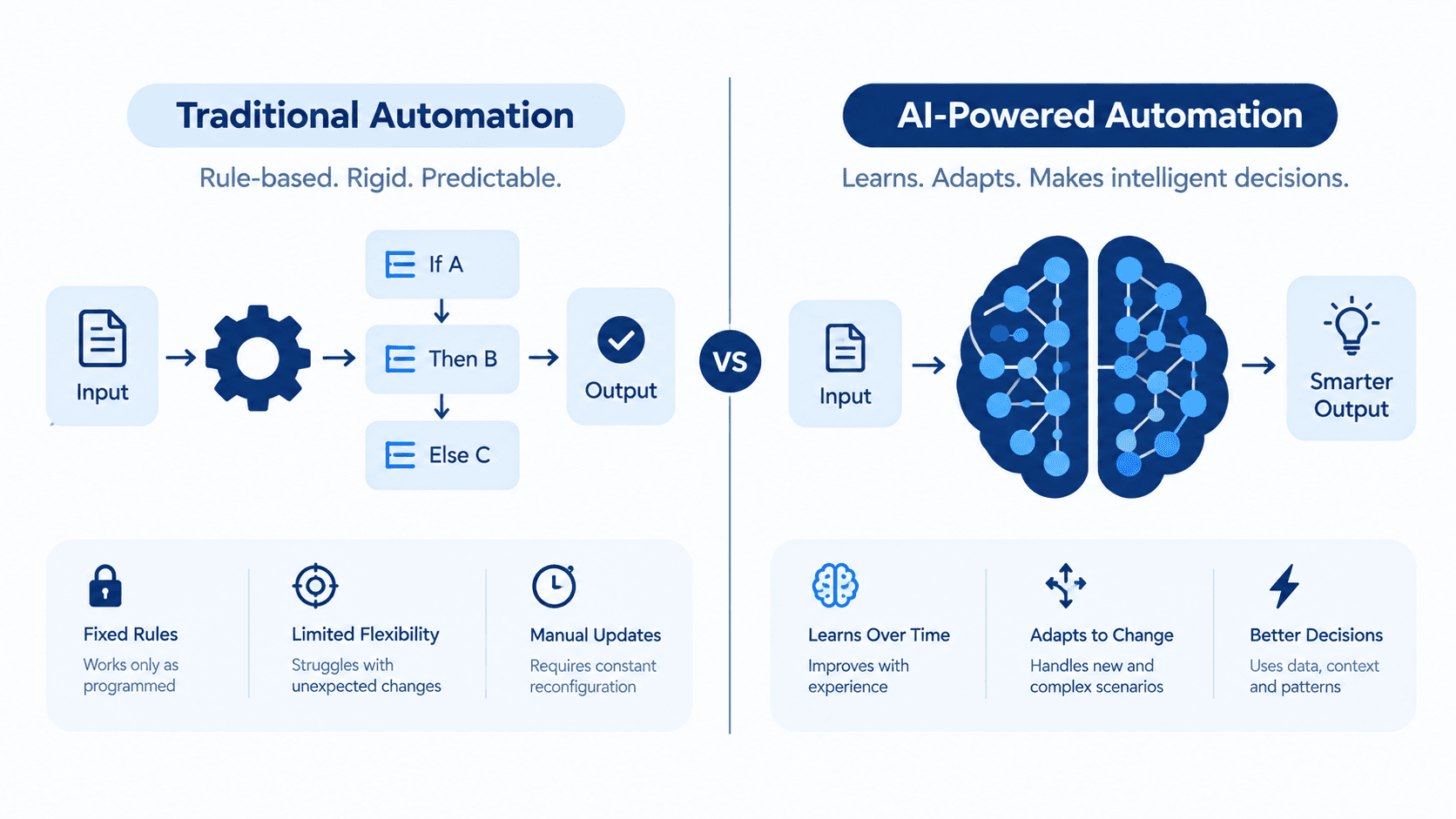
"Automation" and "AI agent" get used interchangeably in a lot of sales pitches, but they are not the same thing, and picking the wrong one for your workflow wastes both budget and time. This breaks down what actually separates them and how to figure out which one fits the problem you're trying to solve.
Traditional Automation: Rules Doing Exactly What You Told Them
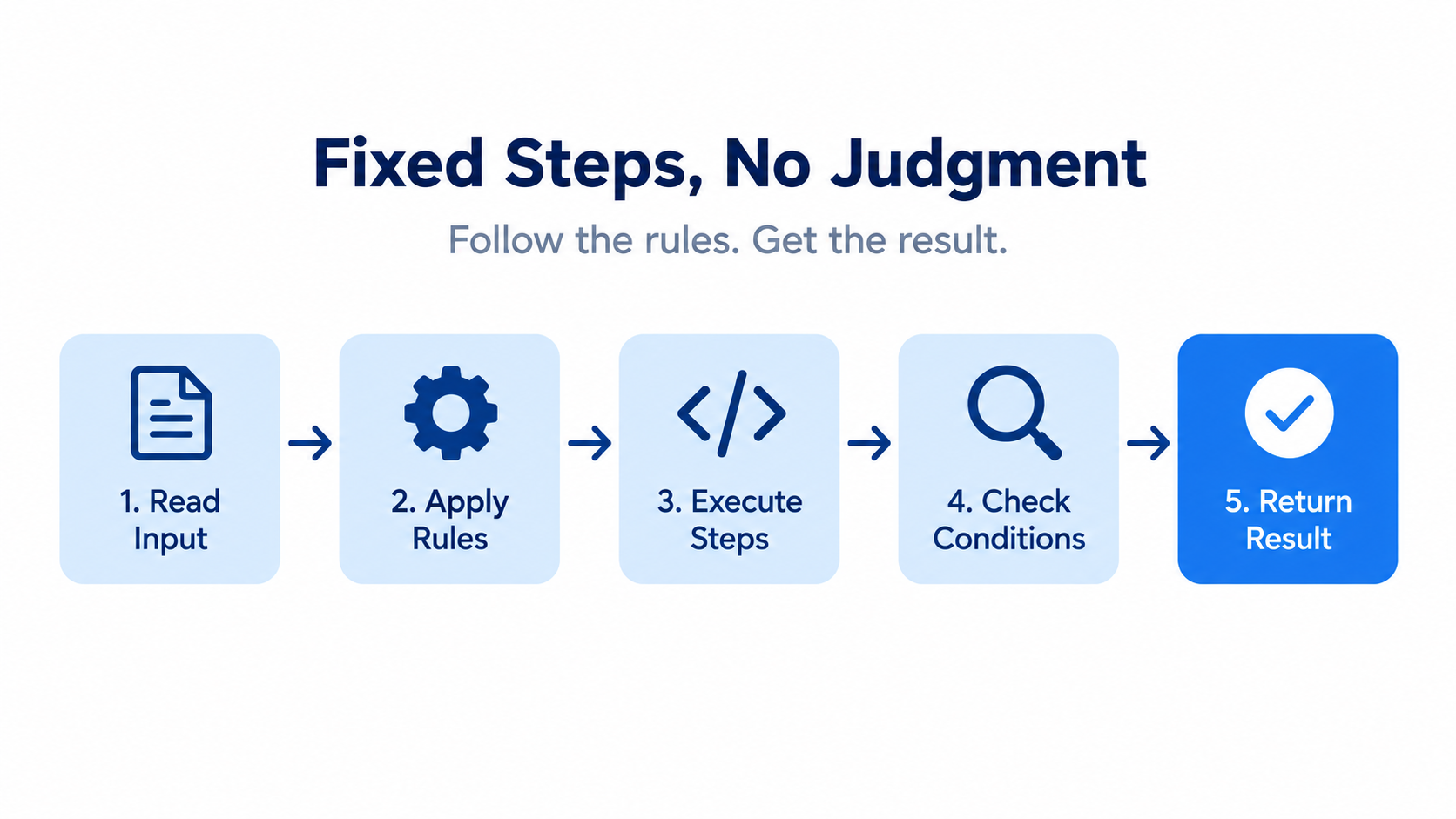
Traditional automation, like workflow tools, RPA bots, and if-this-then-that rules, follows a fixed sequence of steps exactly as programmed. It's fast, predictable, and cheap to run once it's built, but it breaks the moment the input changes in a way nobody anticipated. It has no judgment; it simply executes.
AI Agents: Systems That Decide, Not Just Execute
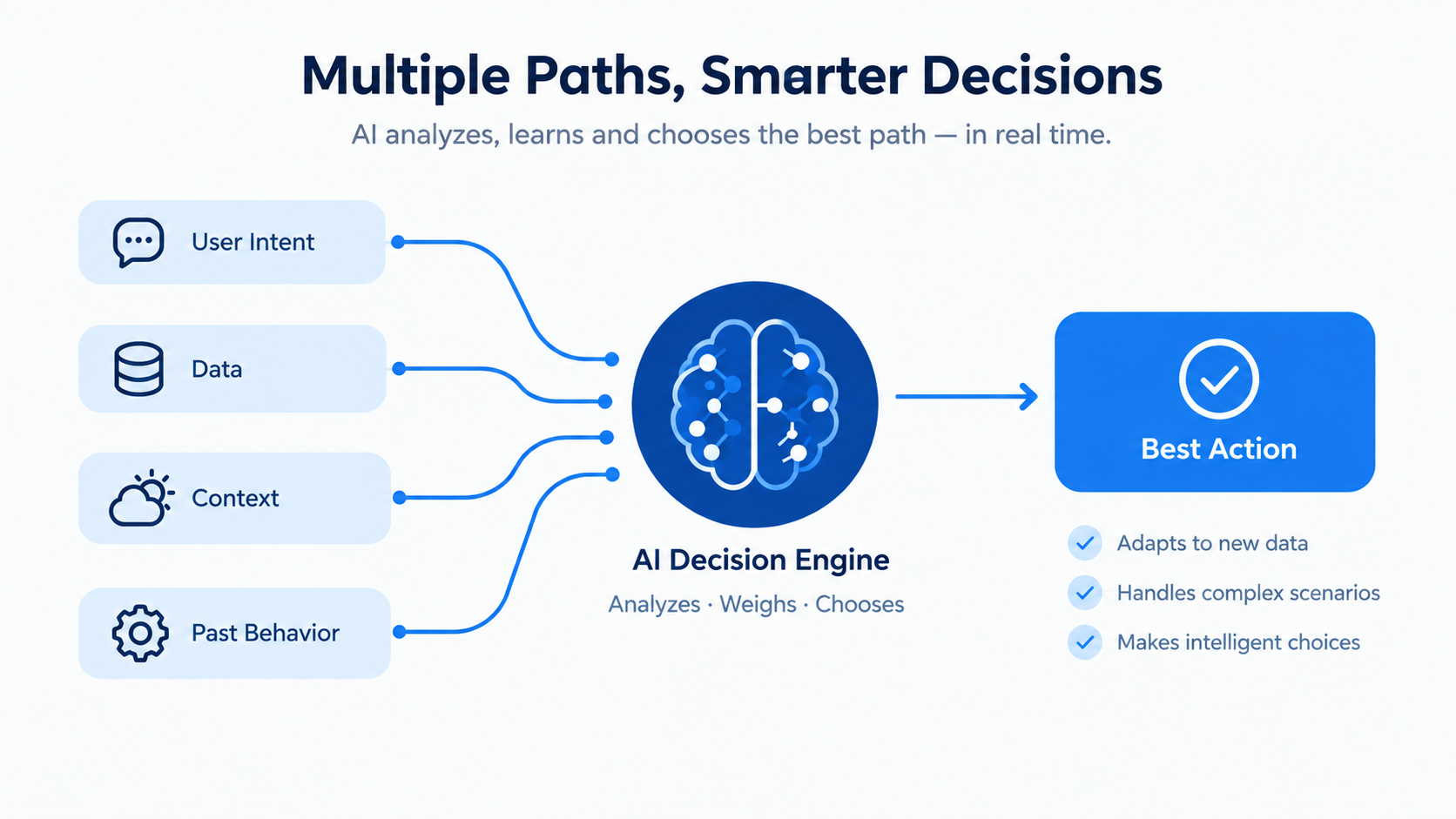
An AI agent uses a language model to interpret a goal, decide which steps to take, and adjust its approach based on what it encounters along the way. Instead of following a fixed script, it can read an unstructured email, decide which system to check, pull the relevant data, and choose the next action based on what it finds, closer to how a capable employee would handle an ambiguous task.
The Real Test: Does the Task Require Judgment?
If a task has a fixed set of inputs and a fixed set of steps, for example moving data from one system to another on a schedule, traditional automation will do it more reliably and far more cheaply than an AI agent. If the task involves reading unstructured information, handling exceptions, or making a judgment call that would normally require a person, that's where an agent starts to earn its cost.
Where Each One Wins in Practice
A few concrete examples make the split clearer.
Traditional automation: invoice data entry, scheduled report generation, syncing records between two systems, sending templated notifications.
AI agents: triaging inbound support tickets across varied phrasing, researching and qualifying leads, drafting responses that reference multiple internal sources, monitoring systems and deciding when a human needs to step in.
The Cost and Reliability Tradeoff
Traditional automation is cheaper to run and almost perfectly predictable because it never improvises. AI agents cost more per task since they call a language model at each decision point, and they need monitoring because they can occasionally misjudge a step. Many businesses get the best results by using automation for the predictable 80% of a workflow and handing only the ambiguous 20% to an agent.
Final Thoughts
Neither option is inherently better, they solve different problems. The mistake to avoid is defaulting to whichever one is trending and forcing your workflow to fit it. Map out where your process actually needs judgment versus where it just needs consistent execution, and that will point you to the right tool, and often to a mix of both.