AI Lead Generation & Sales Automation: 2026 Growth Guide
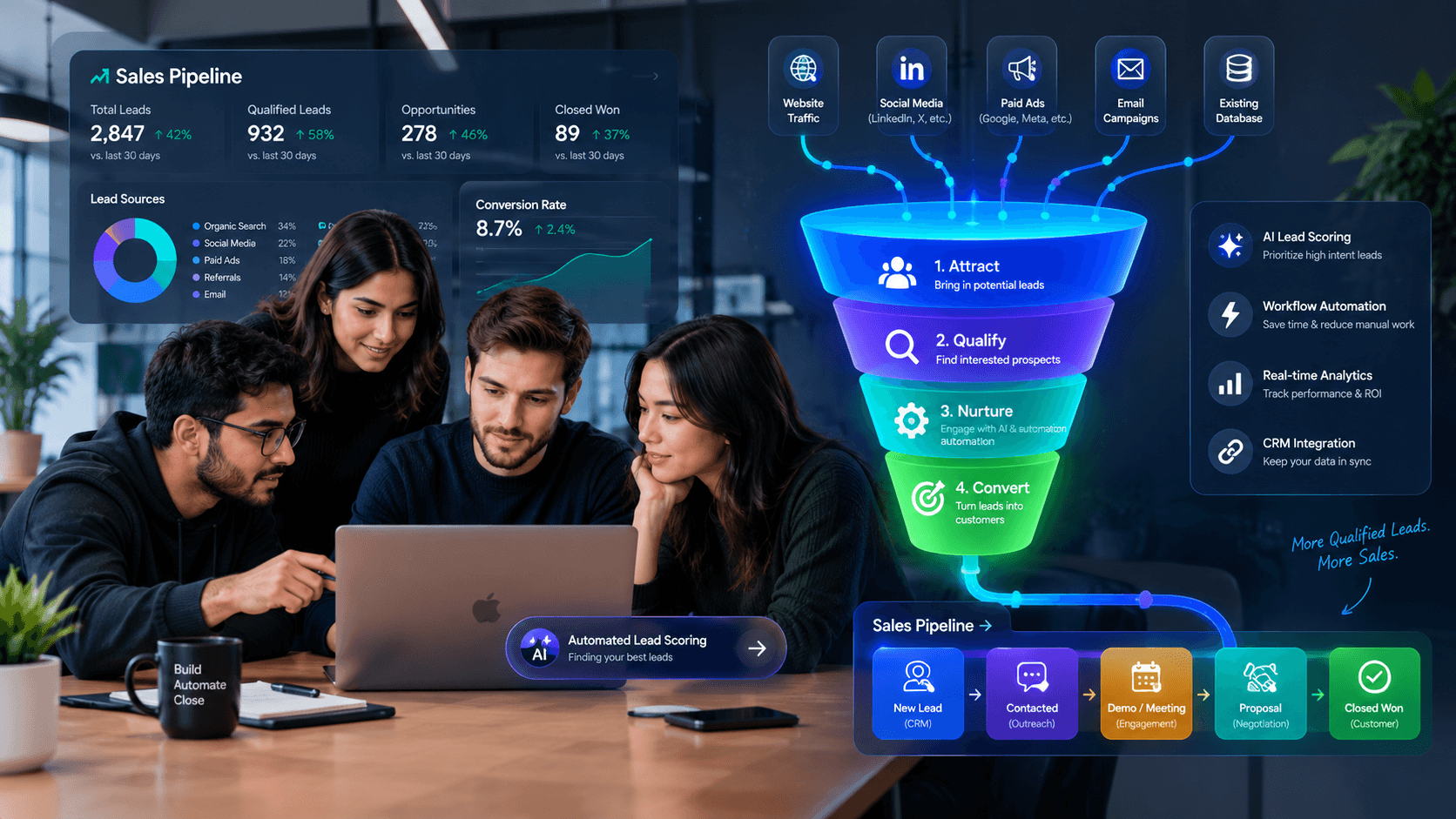
Most sales teams don't have a lead problem. They have a time problem.
Reps spend their day building lists, copying data into the CRM, chasing prospects who were never going to buy, and forgetting to follow up with the ones who would. The result is predictable: good leads go cold, close rates stall, and the pipeline runs on effort instead of on a system.
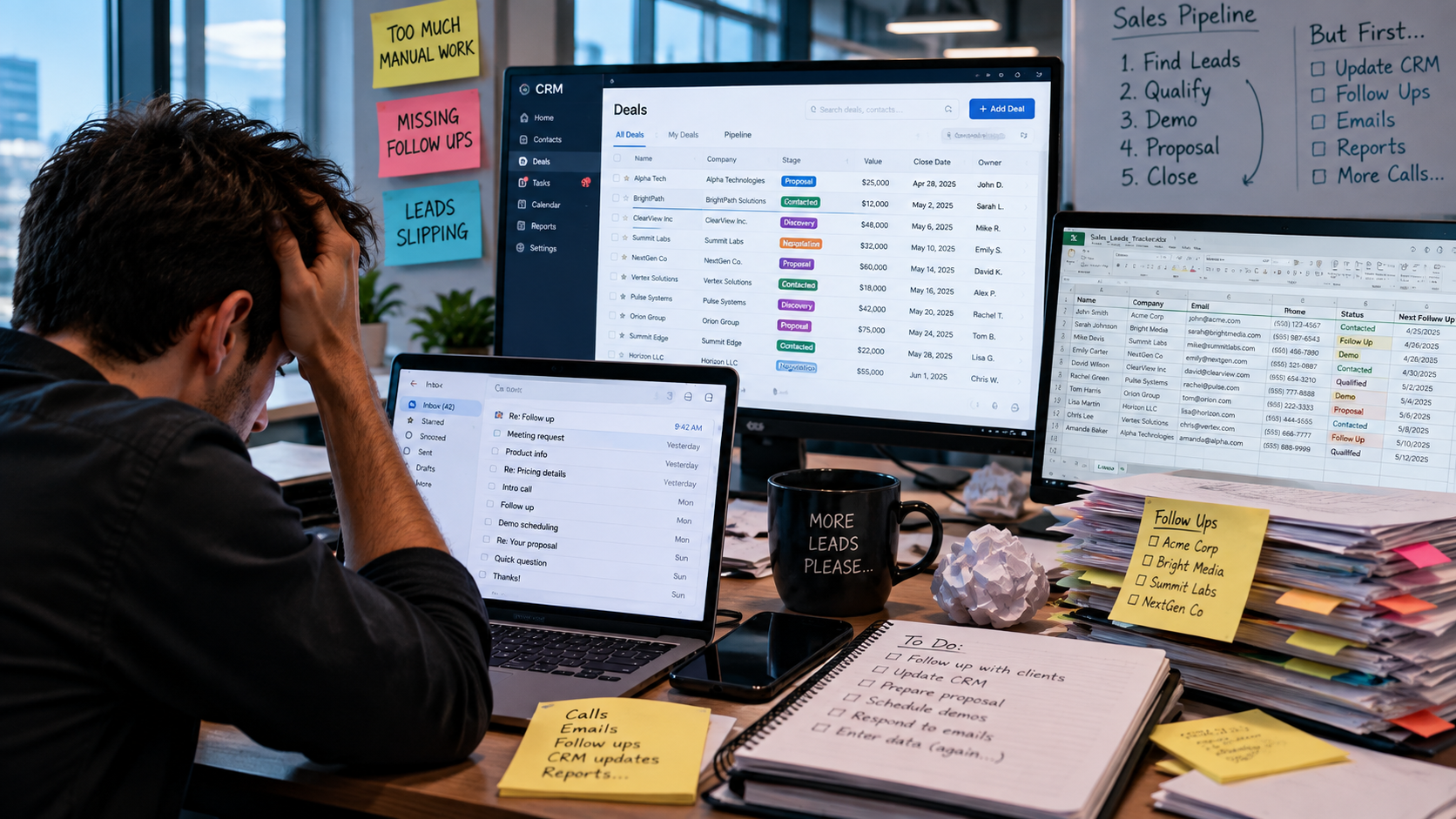
AI lead generation and sales automation fix this by handling the repetitive work — finding, qualifying, scoring, and nurturing leads — so your team spends its energy on the conversations that actually close deals. In 2026, this isn't a nice-to-have anymore. It's the gap between teams that are pulling ahead and teams that are falling behind.
Here's how it works, what the numbers say, and how to roll it out in your business.
What "AI Lead Generation" Actually Means
AI lead generation is the use of artificial intelligence to find and qualify potential customers automatically, instead of relying on manual research and gut feeling.
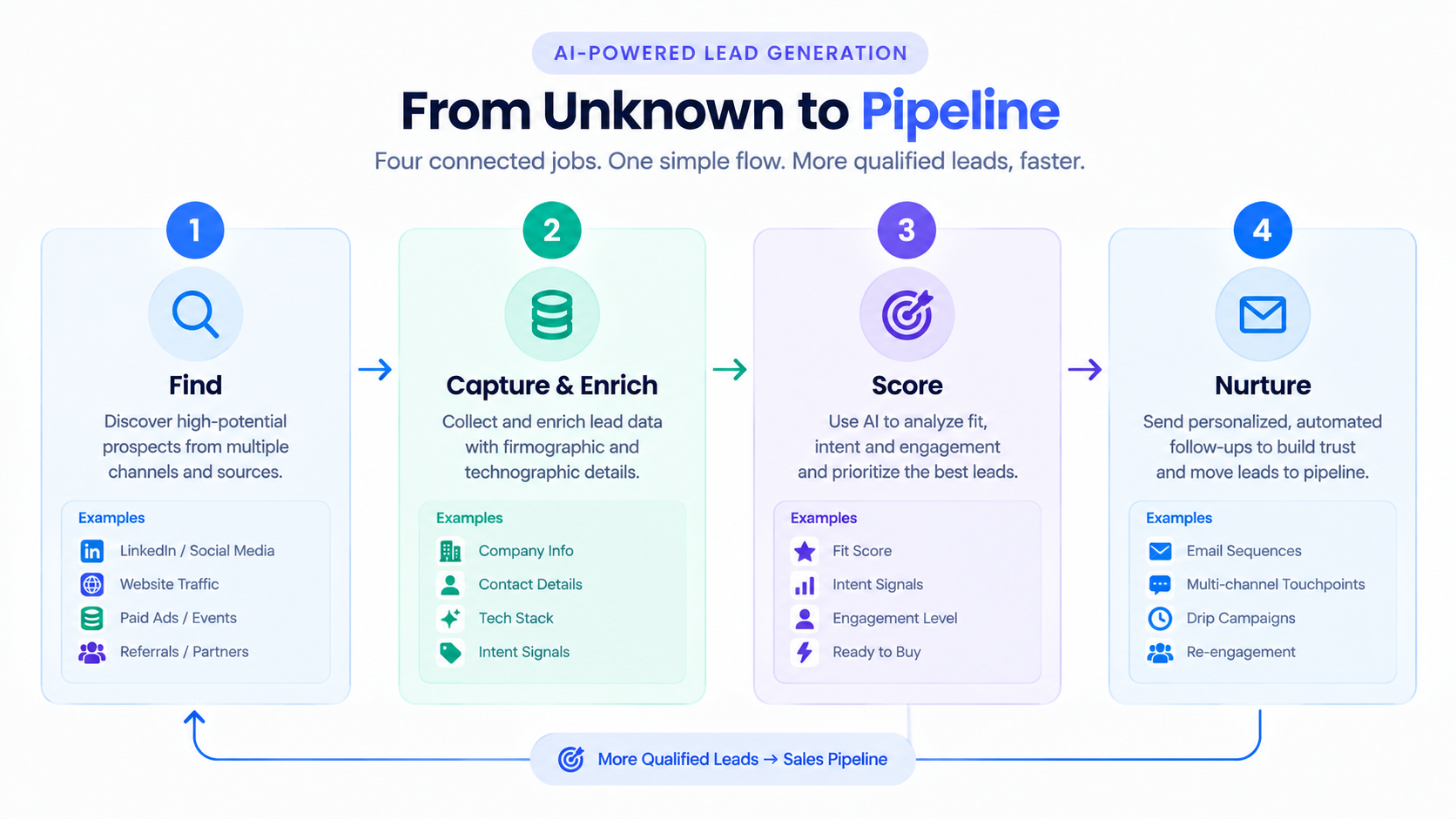
In practice, that covers a few connected jobs:
• Finding prospects that match your ideal customer profile from public data and intent signals.
• Capturing and enriching leads the moment they arrive — filling in missing details automatically.
• Scoring each lead by how likely they are to buy, based on their behavior.
• Nurturing them with timely, personalized follow-up until they're ready for a sales conversation.
Sales automation is the engine underneath all of this — the workflows that move a lead from "first touch" to "booked meeting" without someone manually pushing it along at every step.
Why This Matters More in 2026
The economics have shifted hard in favor of automation. A few numbers worth knowing:
• The follow-up gap is huge. Industry data suggests nearly half of sales reps never follow up with a lead even once. Every one of those is money left on the table.
• Speed decides the sale. Engaging a lead within the first five minutes makes them dramatically more likely to convert than waiting even an hour. Automation is the only reliable way to hit that window every time.
• Better scoring, better focus. Widely cited benchmarks suggest AI-powered lead scoring helps teams surface roughly 50% more sales-ready leads and convert a meaningfully higher share, because reps stop treating every inquiry the same.
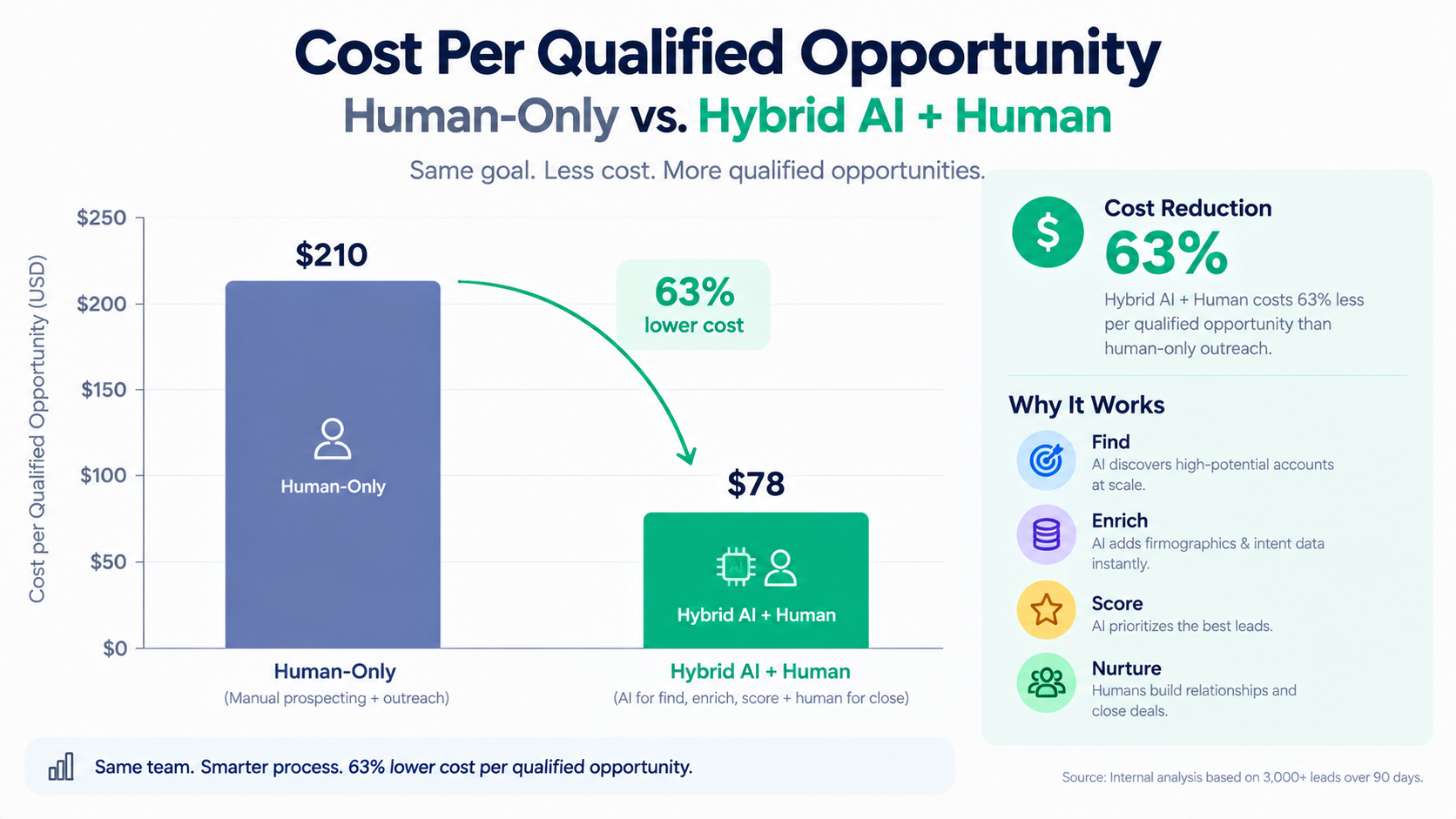
• The cost math works. The Bridge Group's 2026 SDR metrics show cost per qualified opportunity roughly halving in hybrid AI-plus-human teams versus human-only teams.
• Adoption is now mainstream. Salesforce's State of Sales 2026 reports a sharp jump in B2B teams running AI-assisted outbound in production compared to a year earlier.
And critically, McKinsey's research points to a 13–15% revenue uplift and a 10–20% improvement in sales ROI for B2B companies investing seriously in AI — the kind of return that pays back a disciplined rollout within months, not years.
The takeaway isn't "buy more leads." It's "capture better leads, respond faster, and stop losing the good ones to slow, manual processes."
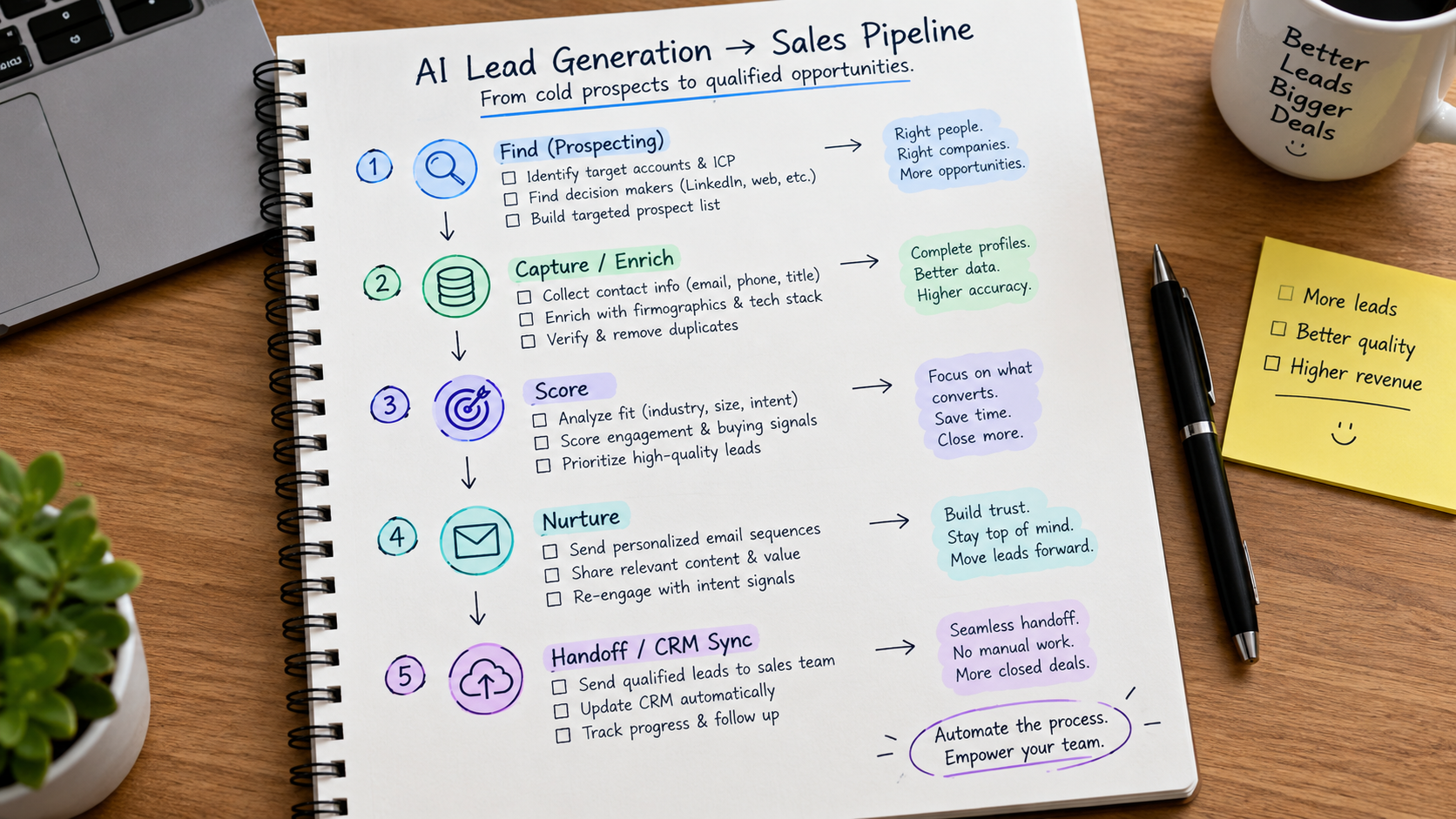
The 5 Stages AI Automates in Your Pipeline
1. Prospecting
Instead of a rep manually building lists, AI identifies companies and contacts that fit your ideal customer profile, pulling from public data and buying-intent signals. This alone can free up hours of low-value research every week.
2. Capture and Enrichment
When a lead fills out a form or messages your chatbot, AI instantly qualifies interest and enriches the record with the details your team would otherwise dig up by hand. No half-empty CRM entries, no manual data entry.
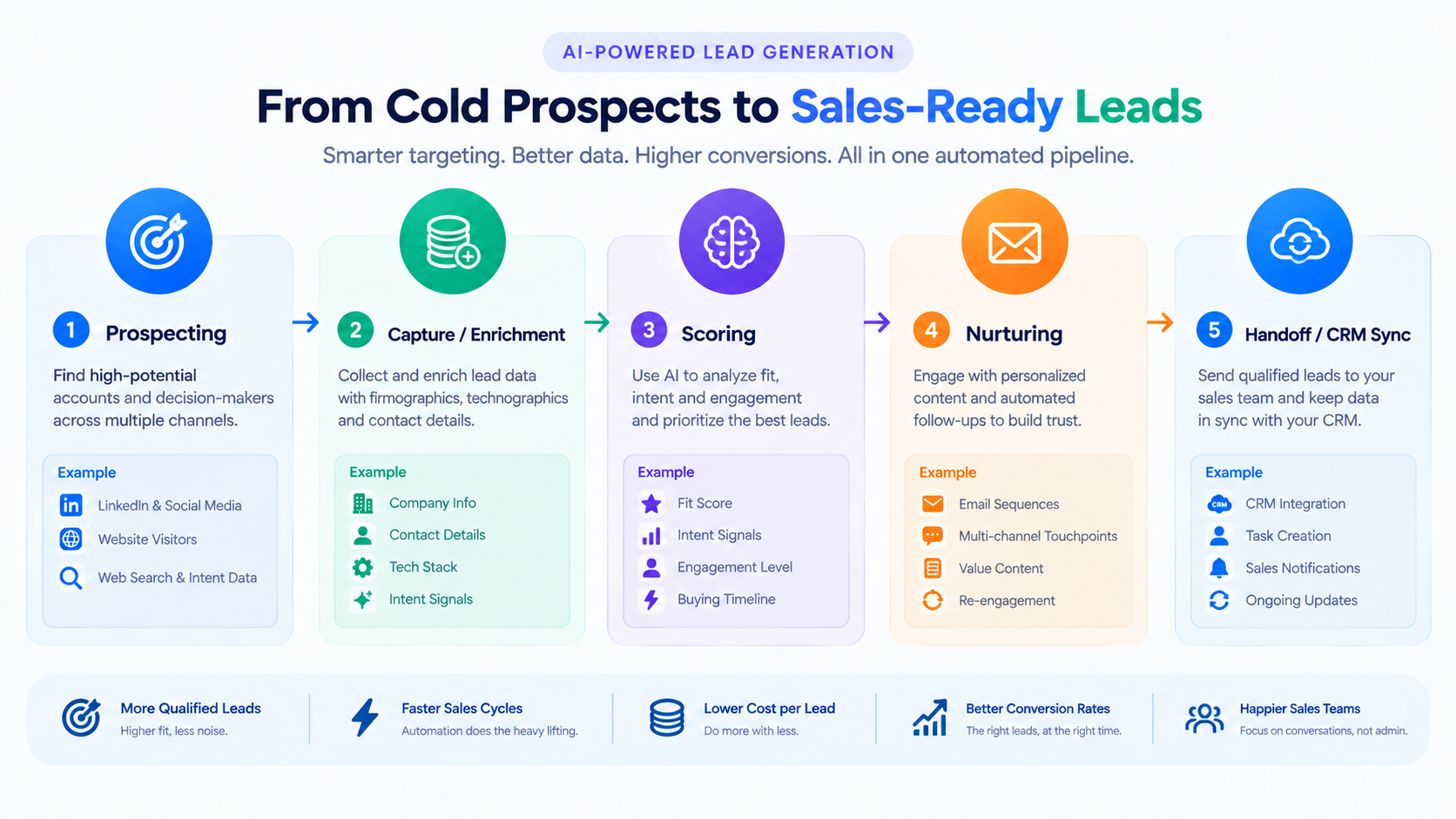
3. Lead Scoring
This is one of AI's highest-impact jobs. The system ranks every lead by likelihood to buy, based on real behavior — pages visited, emails opened, replies sent. Your reps immediately know who deserves a call today and who needs more nurturing.
4. Nurturing and Follow-Up
Automated, personalized sequences keep warm leads engaged across email and other channels until they're ready to talk. Nurtured leads consistently make larger purchases than un-nurtured ones, and automation makes sure no one slips through the cracks.
5. Handoff and CRM Sync
The moment a lead is sales-ready, it's routed to the right rep with full context, and the CRM updates itself. Your team walks into every conversation already knowing who they're talking to and why.
The AI SDR: Automation Moves Into Outbound
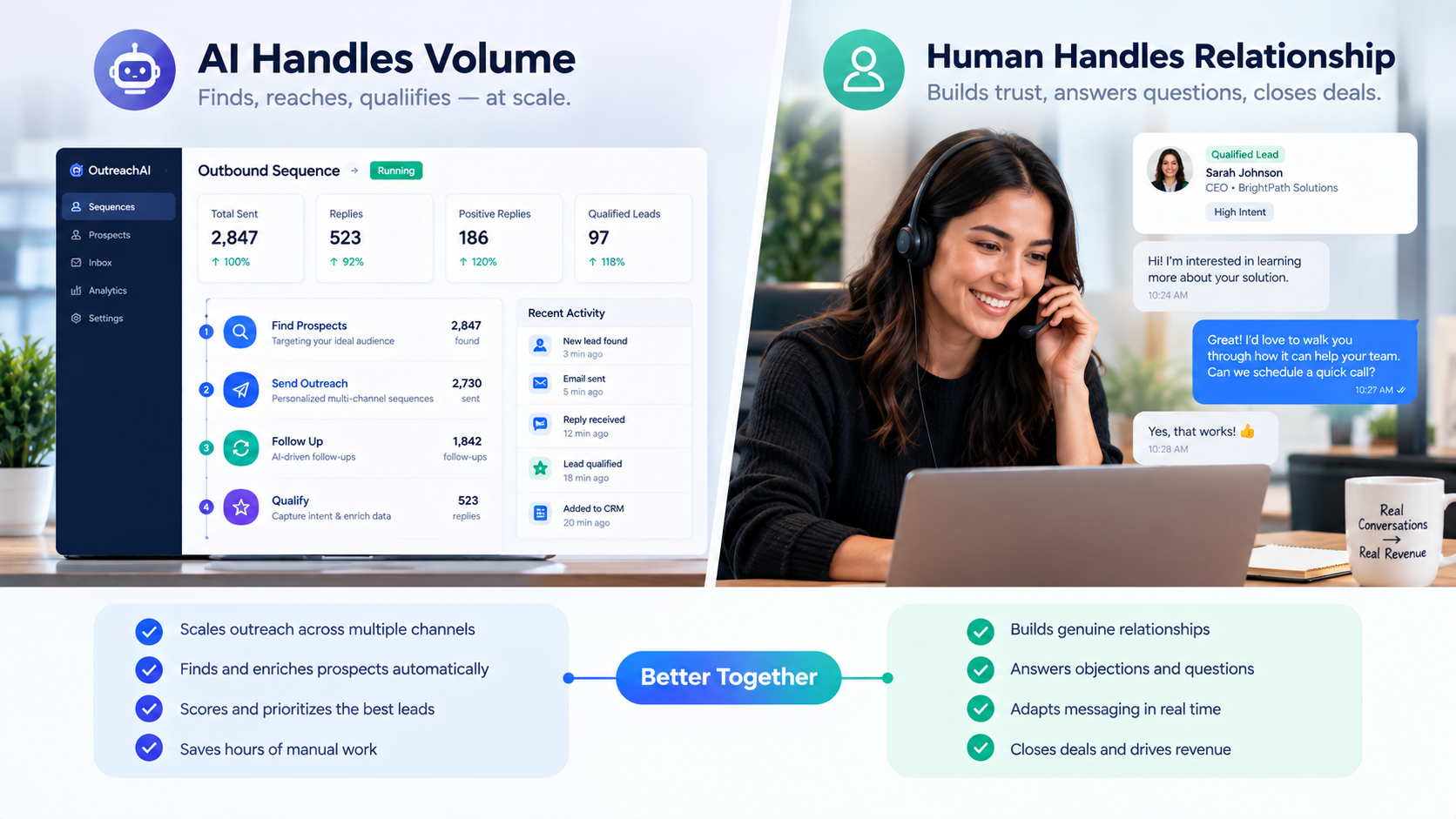
The newest shift in 2026 is the AI SDR — automation that handles the repetitive front end of outbound sales: list-building, first-touch outreach, and follow-up scheduling. Salesforce and other 2026 benchmarks show adoption climbing fast.
A realistic note, though: AI SDRs let teams send far more outreach, but raw reply rates on high-volume outbound tend to drop. That's exactly why the winning approach is hybrid — AI handles the volume and the admin, humans handle the real conversations and relationships. Automation amplifies a good sales motion; it doesn't replace one.
How to Start (Without a Risky Overhaul)
You don't need to rebuild your entire sales stack. Start focused:
1. Fix your fastest leak first. For most teams that's lead response time or follow-up. Automating just those two often produces a visible lift within the first month.
2. Clean your data before you automate. AI scoring and enrichment are only as good as the CRM they run on. Audit your fields and lead sources first.
3. Define clear scoring rules with your reps. Let sales help decide what "sales-ready" looks like, so they trust the leads the system sends them.
4. Measure a baseline. Track cost per lead, response time, conversion rate, and reps' admin hours before you switch anything on, so the improvement is provable.
5. Expand from the first win. Once one stage is delivering, use those results to justify automating the next. Expect the biggest ROI to show up around the three-to-six-month mark, once the system has enough data.
Where Syntherix Technologies Comes In
At Syntherix Technologies, we build AI-powered lead generation and sales automation systems around your actual pipeline — not a generic template. That means automated prospecting, real-time lead capture and enrichment, smart scoring, and follow-up workflows that connect straight into your existing CRM and tools.

Our focus is simple: get your team in front of the right prospects at the right moment, cut the manual busywork, and turn your pipeline into a system that runs consistently instead of depending on who remembered to follow up.
If your leads are going cold or your reps are drowning in admin, we can help you find the highest-impact place to automate first.
The Bottom Line
AI lead generation in 2026 isn't about replacing your sales team — it's about removing the repetitive work that stops them from selling. Capture better leads, respond in minutes instead of days, score them intelligently, and never let a good prospect go cold.
The teams winning right now aren't working harder on manual prospecting. They've built a system. That system is one well-chosen workflow away.
Want a pipeline that fills itself with better leads? Talk to Syntherix Technologies.