Native vs Cross-Platform Mobile Apps: Which Is Right for You in 2026?
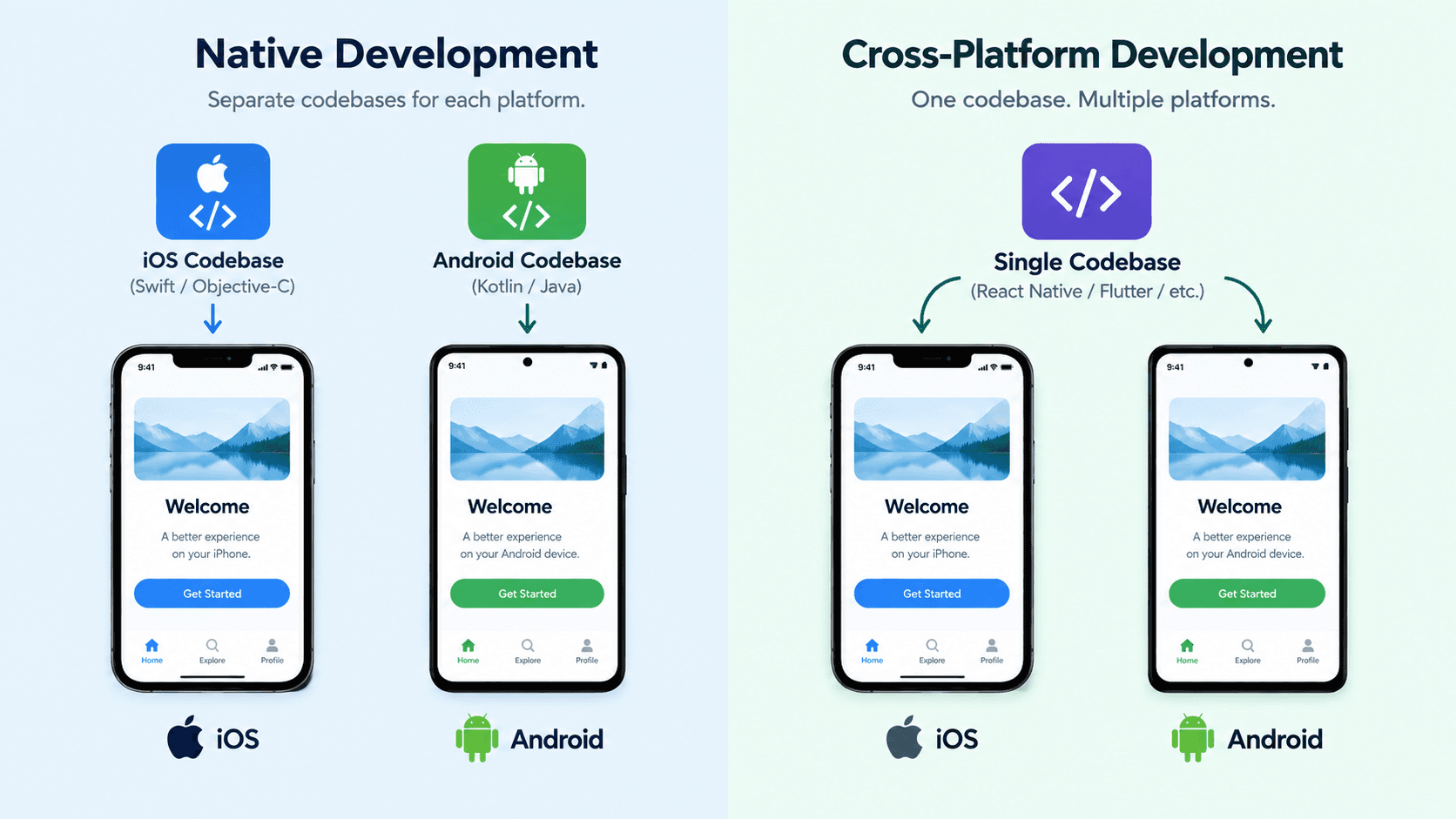
Every mobile app project reaches the same fork in the road: build separate native apps for iOS and Android, or use a cross-platform framework and ship one codebase to both. In 2026, that decision has real consequences for your budget, your launch timeline, and how your app feels to actual users. Here's how to think through it without getting lost in framework hype.
What "Native" and "Cross-Platform" Actually Mean
Native development means building separate apps in each platform's own language and tools, Swift for iOS and Kotlin for Android, giving direct access to every device feature. Cross-platform frameworks like React Native and Flutter let you write one codebase that compiles down to both platforms, trading a small amount of native performance for significantly less development time.
Performance: Where the Gap Actually Matters
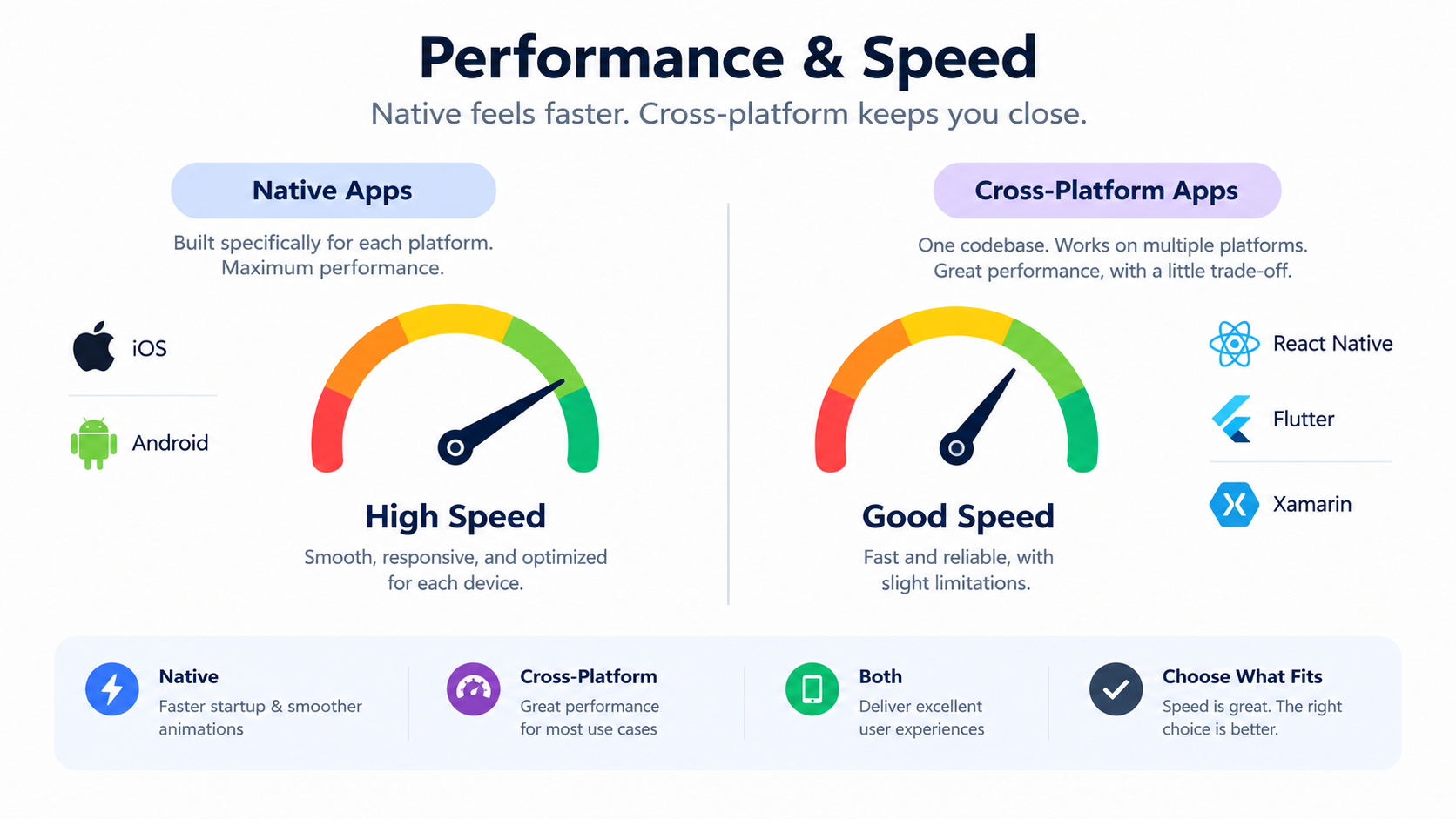
For most business apps, forms, dashboards, content, and e-commerce, modern cross-platform frameworks are fast enough that users won't notice a difference. The gap becomes real for apps leaning on heavy animation, real-time graphics, augmented reality, or intensive background processing, where native code still has a measurable edge.
Cost and Timeline: The Biggest Practical Difference
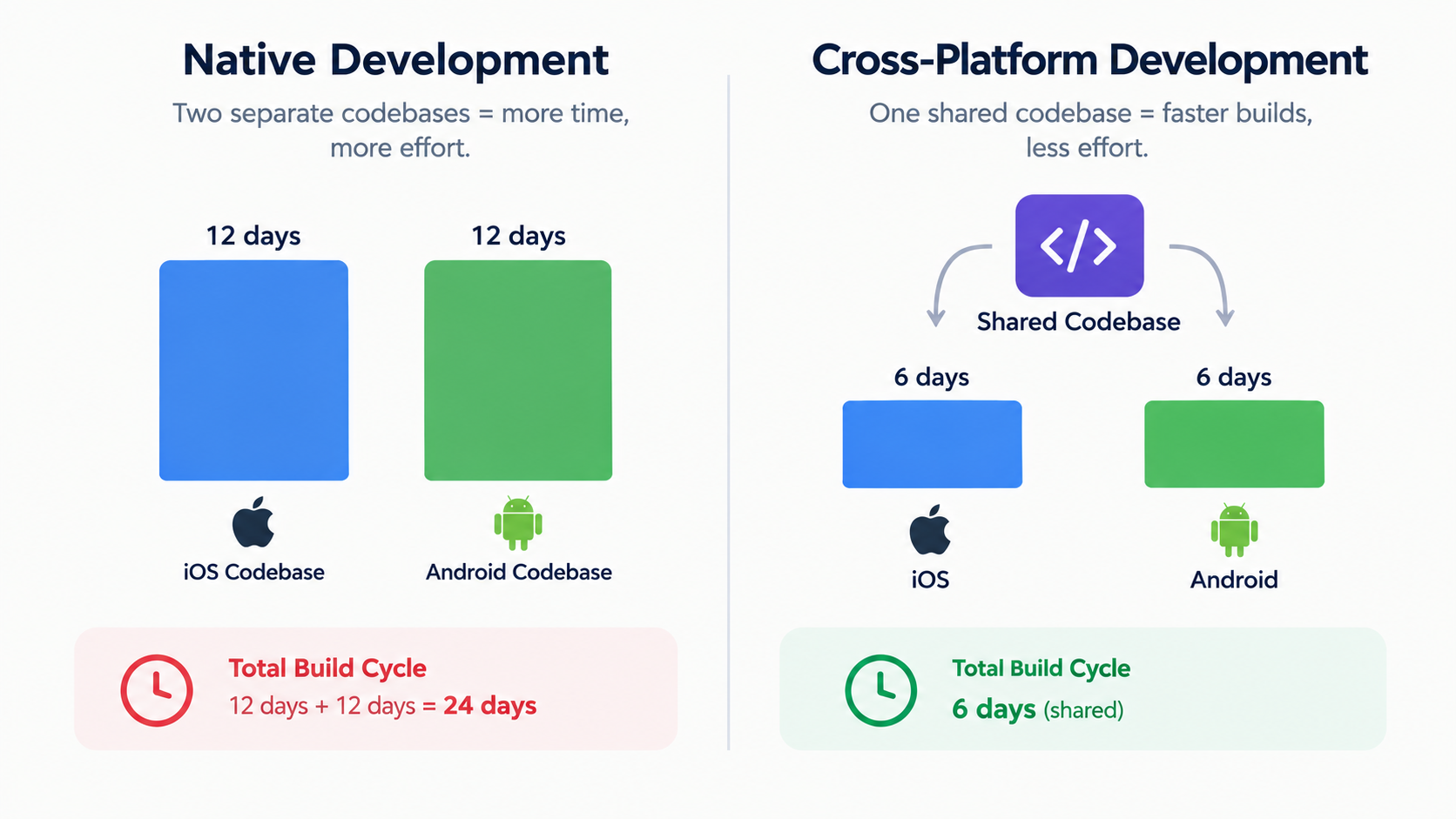
Building two native apps means maintaining two codebases, two sets of bugs, and often two overlapping teams. A shared cross-platform codebase typically cuts development time significantly since features are built once instead of twice. That difference compounds every time you ship an update, which is often the deciding factor for startups and small teams that need to move fast.
When Native Is Still the Right Call
Choose native when your app depends heavily on camera or sensor processing, complex animations, background audio, or deep integration with platform-specific features the moment they're released. It also makes sense when you only need to support one platform, since there's no cross-platform tax to pay in the first place.
When Cross-Platform Is the Smarter Business Decision
If you're validating an idea, launching an MVP, or building a standard business app where the UI is fairly common, cross-platform is usually the better call. You'll reach both app stores faster, spend less to maintain feature parity, and free up budget to invest in the parts of the product that actually differentiate you.
Final Thoughts
There's no universally right answer here, only the right answer for your specific app, timeline, and budget. The safest approach is to map out your must-have features first, then match the technology to those requirements instead of picking a framework and hoping it fits. A development partner who has shipped both native and cross-platform apps can usually make that call in a single conversation.