Top 10 Technology & Innovation Trends Dominating 2026 | Syntherix Guide

Top 10 Technology & Innovation Trends Dominating 2026
From agentic AI and Physical AI to quantum-safe cryptography — the breakthroughs every business leader, technologist, and curious mind needs to understand right now.
Sources: Gartner, Deloitte, MIT Technology Review, World Economic Forum
We are living through what Gartner analysts are calling the "intelligence supercycle" — a moment in history when artificial intelligence has stopped being an experiment and started becoming structural infrastructure. The technologies emerging in 2026 are not incremental updates; they are the foundations upon which the next decade of human progress will be built.
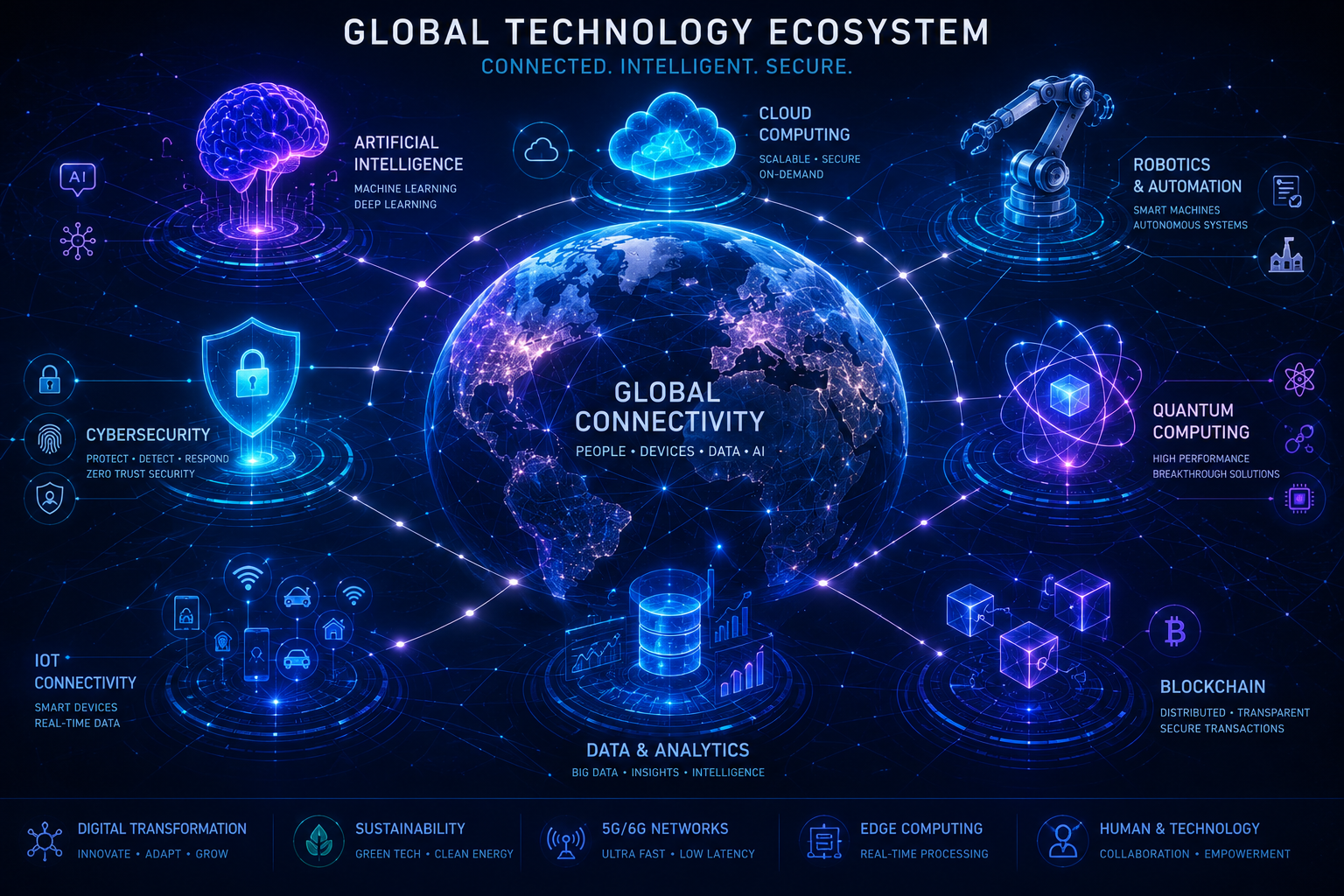
This blog brings together the definitive research from Gartner's 2026 Strategic Technology Trends report, Deloitte's Tech Trends, MIT Technology Review's Breakthrough Technologies list, the World Economic Forum, and Capgemini's TechnoVision — synthesized into one comprehensive guide to the trends that matter most right now.
Whether you are a CIO charting your next investment, a developer future-proofing your skills, or simply a curious observer of the world — these are the trends you cannot afford to miss in 2026.
Deep Dive The 10 Trends Redefining Technology in 2026
Agentic AI & Multiagent Systems 🔥 Hottest Trend
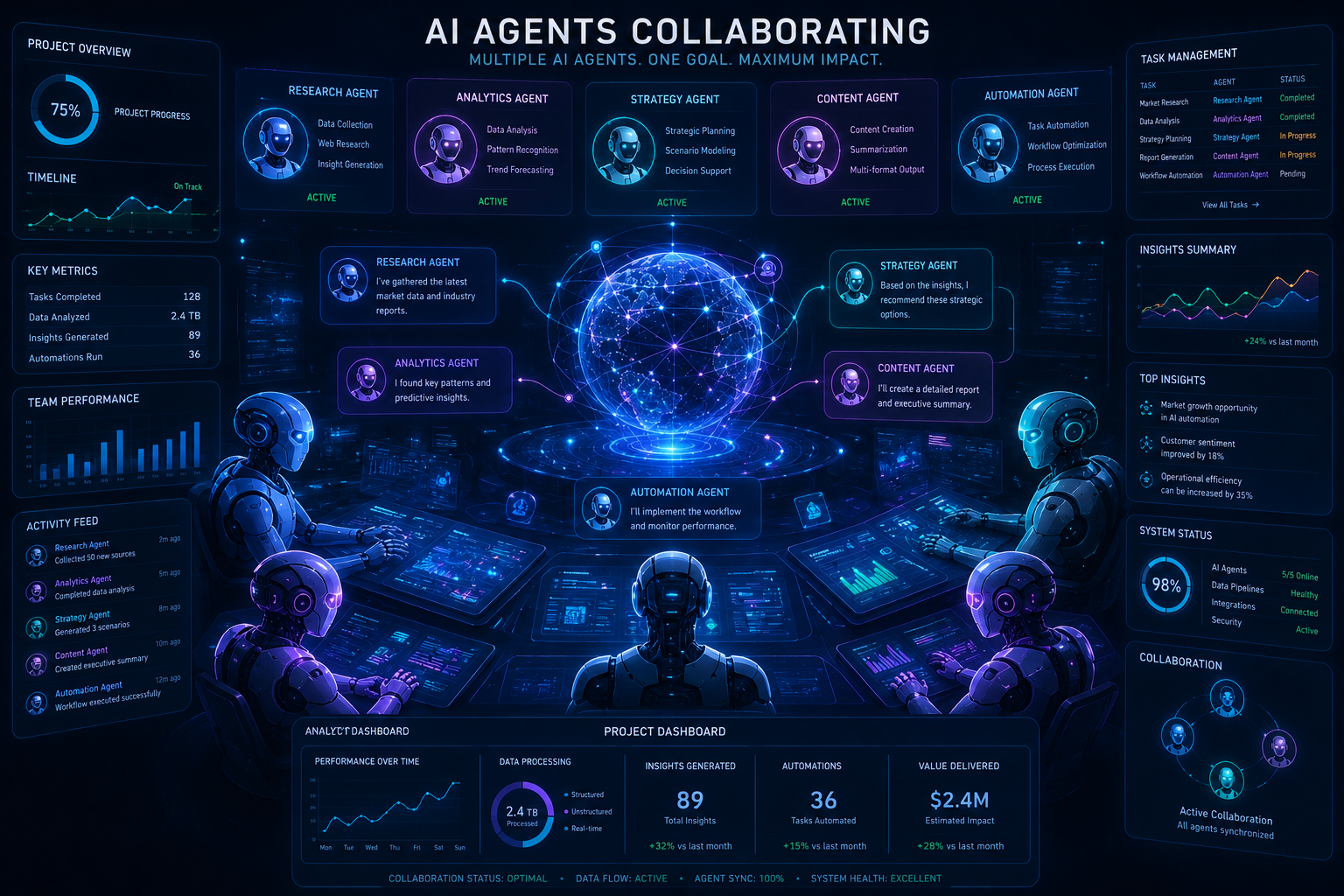
Artificial intelligence has made its most significant leap yet: from answering questions to autonomously completing complex, multi-step workflows. Agentic AI systems can plan, reason, use tools, call APIs, and self-correct — all with minimal human supervision. What makes 2026 different is the rise of multiagent architectures , where multiple specialized AI agents collaborate like a distributed workforce.
According to Gartner, multiagent systems allow modular AI agents to collaborate on complex tasks, improving automation and scalability across industries. From healthcare diagnostics to financial auditing to software development pipelines, these systems are moving from pilot projects into production at scale. Deloitte notes that while only 11% of organizations have agents in production today, 38% are currently piloting them — meaning the flood is coming.
The paradigm shift, as Capgemini puts it, is from "writing code" to "expressing intent" — developers articulate desired outcomes and AI autonomously delivers. This is not a productivity upgrade; it is a fundamental restructuring of how knowledge work gets done.
Key Takeaway: Organizations that design their processes around agentic AI — not just bolt it on — will see compounding advantages in speed, quality, and cost over the next three years.
Physical AI — Intelligence Enters the Real World
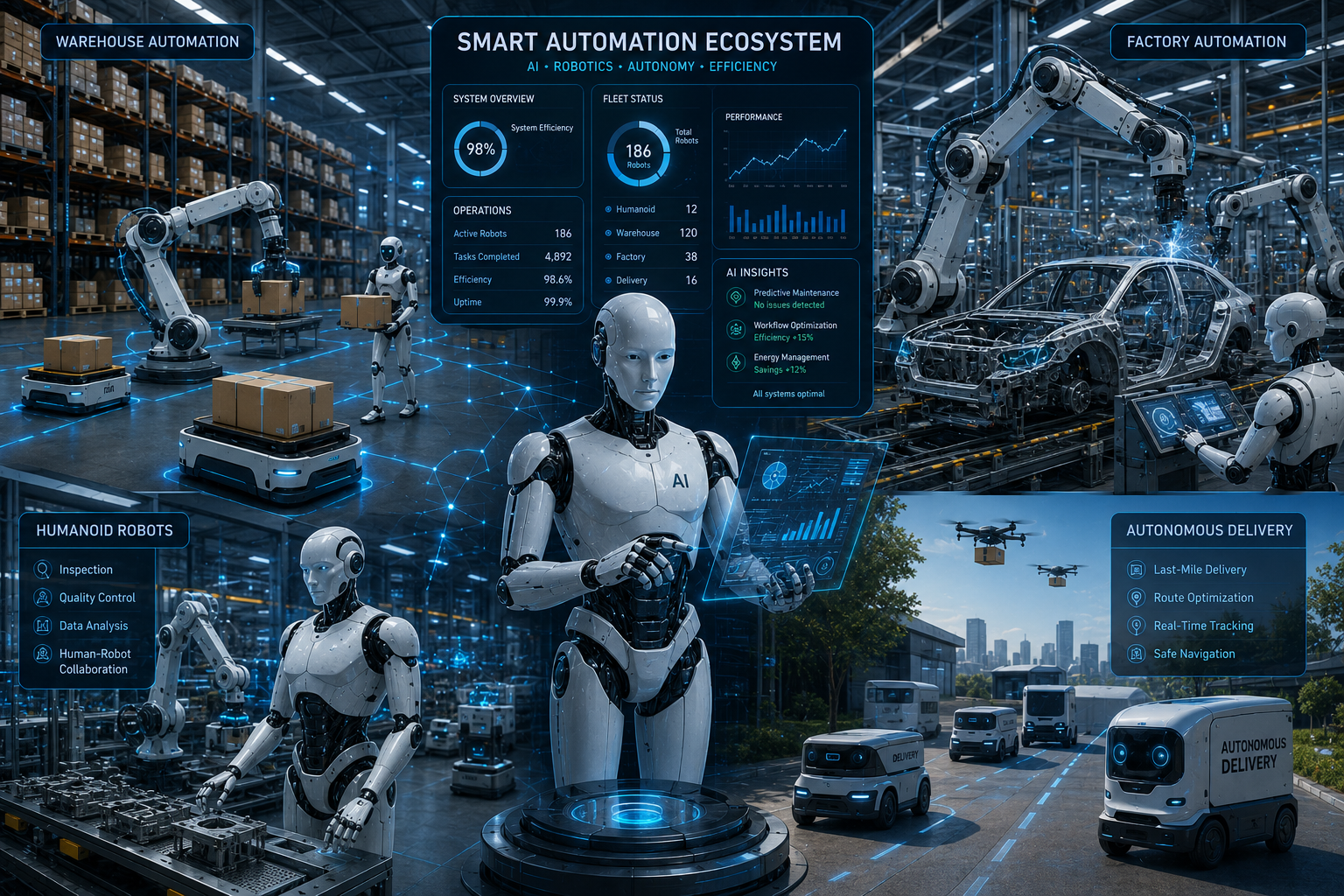
For years, AI lived on screens. In 2026, it is stepping into the physical world. Gartner identifies Physical AI as a top strategic trend — the integration of AI into robots, drones, autonomous vehicles, and industrial equipment that sense, reason, and act in dynamic environments.
The numbers are striking: Amazon has deployed its millionth warehouse robot, with its DeepFleet AI coordinating the entire fleet and improving warehouse travel efficiency by 10%. BMW's factories now have cars driving themselves through kilometer-long production routes autonomously. These are not prototypes — they are operational realities at scale in 2026.
Modern robots combine sensors, cameras, AI, and edge computing to operate safely alongside humans — perceiving surroundings and responding to unstructured, dynamic conditions that would have stumped previous generations of automation. Healthcare, manufacturing, elder care, and logistics are all being transformed simultaneously.
Key Takeaway: Physical AI is the convergence of embodied robotics and advanced AI reasoning. Industries that deploy it first will set the productivity benchmarks that others will scramble to match.
Domain-Specific Language Models (DSLMs)
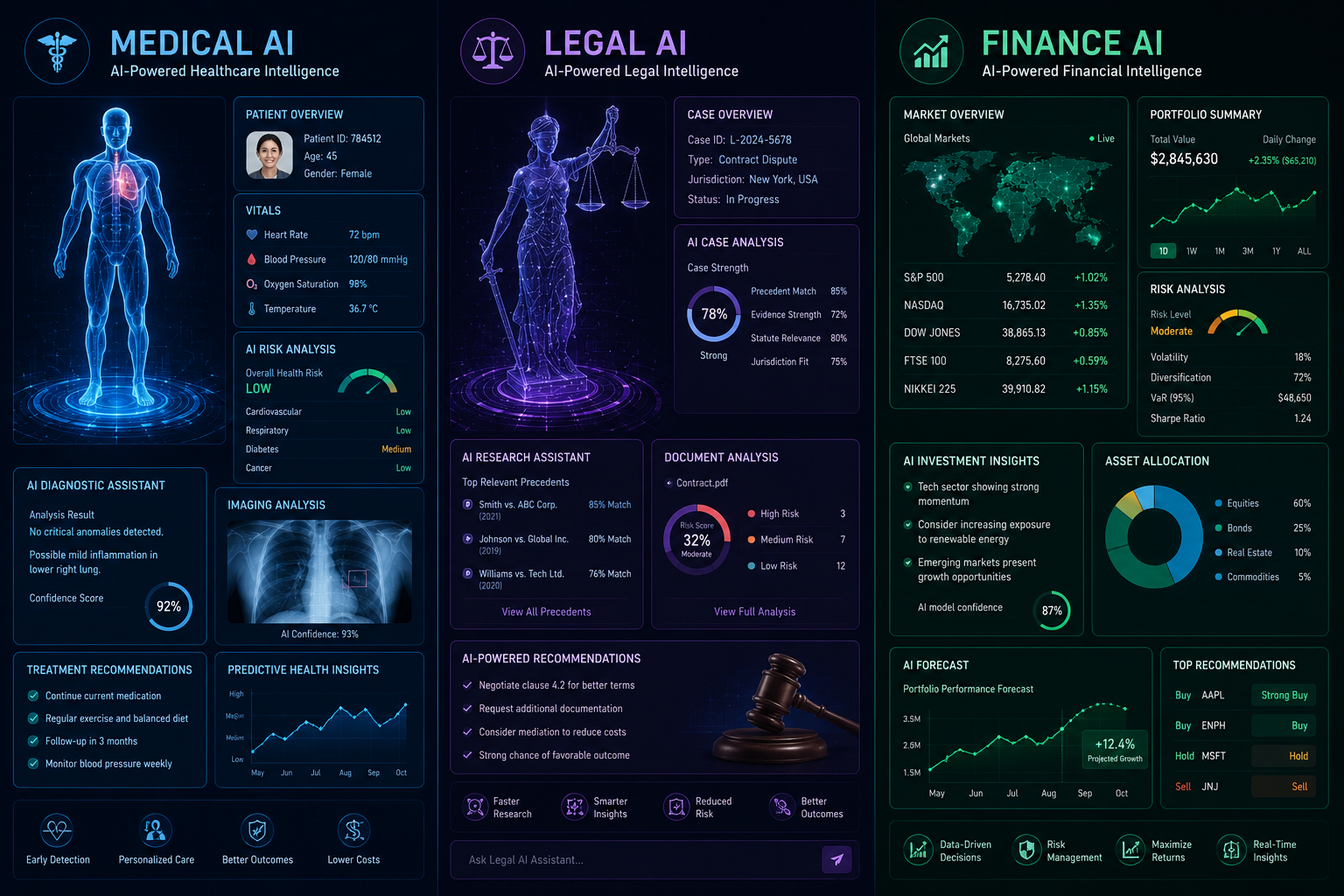
General-purpose large language models democratized AI access — but they are giving way to a more powerful next act: Domain-Specific Language Models . These are AI models trained on deep, specialized corpora — legal documents, medical literature, financial filings, engineering schematics — delivering dramatically higher accuracy, compliance alignment, and trust within their specific domains.
According to Gartner, DSLMs deliver higher accuracy and compliance for industry-specific use cases compared to their general counterparts. A legal DSLM trained on case law and statutes can reason about contract risk in ways a general model cannot. A clinical DSLM can surface drug interaction warnings with a reliability threshold that meets regulatory standards.
The implication for enterprise teams is profound: the era of "one model fits all" is ending. The competitive advantage will belong to organizations that build or license purpose-fit models — and combine them effectively within multiagent systems.
Key Takeaway: Investing in or building a domain-specific AI model is no longer a research luxury — it is a competitive necessity for any regulated or knowledge-intensive industry.
Preemptive Cybersecurity & AI Security Platforms ⚠ Critical
The cybersecurity landscape in 2026 has fundamentally changed character. Threats now operate at machine speed, using AI to probe, adapt, and attack faster than human security teams can respond. The answer — also driven by AI — is a shift from reactive defense to preemptive cybersecurity .
Gartner identifies preemptive cybersecurity as one of its top 10 strategic trends: defense moving from blocking known threats to using AI to anticipate and neutralize attacks before they strike. Simultaneously, AI Security Platforms are emerging to centralize visibility and control across both third-party and custom AI applications — a critical capability as enterprises deploy hundreds of AI models across their stack.
A complementary trend is Digital Provenance — verifying the origin and integrity of software, data, and AI-generated content. In a world where deepfakes, synthetic media, and AI-generated misinformation are rampant, provenance verification is becoming as essential as a digital signature.
Key Takeaway: Security is no longer a perimeter problem — it is an AI problem that requires an AI solution. Organizations must move from reactive threat response to proactive threat anticipation now.
Quantum Computing & Lattice-Based Cryptography
Quantum computing has crossed from experimental to early industrial deployment in 2026. In highly specialized sectors — materials science, drug discovery, financial optimization, and cryptography — quantum processors are solving problems that would take classical supercomputers centuries to crack. The technology is still maturing, but the trajectory is unmistakable.
The World Economic Forum's Top 10 Emerging Technologies of 2026 highlights a critical corollary: lattice-based cryptography , a new approach to encryption designed to remain secure even as quantum computers grow more powerful. The technology hides data in complex mathematical lattice structures — making it extraordinarily difficult to break using either classical or quantum attacks.
This "noise-based" security approach is already being adopted at scale: Apple uses it in iMessage, and Google has announced plans to integrate it into Android. Companies that have not begun their quantum-resistant migration are now operating with a ticking clock on their current encryption infrastructure.
Key Takeaway: Begin your post-quantum cryptography migration now. The window between quantum becoming practically dangerous and organizations being prepared is narrowing faster than most security teams realize.
AI-Native Software Development
Software engineering is undergoing its most profound transformation since the invention of high-level programming languages. AI-native development platforms — named a top Gartner strategic trend for 2026 — use generative AI not just to autocomplete code, but to handle entire development workflows: architecture design, test generation, security review, documentation, and deployment.
MIT Technology Review's Breakthrough Technologies 2026 list echoes this, highlighting AI coding tools as revolutionizing how we write, test, and deploy code — making it easier and faster to build sophisticated applications than ever before. Gartner projects that by 2030, roughly 80% of organizations will have evolved large software engineering teams into smaller, AI-augmented ones.
The implication is not that developers are being replaced — it is that developer productivity is being multiplied, and the barrier to building sophisticated software is being dramatically lowered. A solo founder in 2026 can ship what previously required a team of twenty.
Key Takeaway: Developers who learn to direct AI coding tools effectively — rather than resist them — will be the most productive and sought-after engineers of the next decade.
Sustainable Technology & Next-Gen Energy Innovation
The green technology revolution in 2026 is not a single trend — it is a cluster of intersecting breakthroughs that together are rewriting the rules of the global energy economy. MIT Technology Review spotlights sodium-ion batteries — made from abundant materials like salt — as a cheaper, safer alternative to lithium-ion cells, poised to power grids and affordable electric vehicles worldwide.
The World Economic Forum highlights everything-to-grid technology : mobilizing distributed assets like EVs and factory batteries to push stored electricity back to the grid during peak demand. In California, more than 16,000 solar-equipped homes linked into a distributed network pushed 51 megawatts back to the grid during one evening peak — exceeding the capacity of several fossil-fuel peaker plants, and without the emissions.
Meanwhile, nuclear energy is experiencing a genuine renaissance. From advanced small modular reactors (SMRs) to molten salt designs, nuclear is being repositioned as a clean, always-on complement to intermittent renewables — particularly as AI data centers create unprecedented electricity demand.
Key Takeaway: The energy transition is accelerating. Organizations that align their infrastructure and supply chains with clean energy sources will gain both regulatory advantages and resilience.
Spatial Computing & the Industrial Metaverse
The metaverse of consumer entertainment is giving way to something far more consequential: the industrial metaverse . Spatial computing — the fusion of digital twins, augmented reality, and AI-driven simulation — is transforming manufacturing, engineering, construction, and healthcare in 2026.
Through spatial computing, digital data becomes visible as part of our three-dimensional physical environment. Engineers can virtually modify a factory floor and simulate the impact before touching a single machine. Surgeons can rehearse complex procedures in photorealistic digital environments. Remote workers wearing AR headsets can perform sophisticated maintenance guided by AI overlays showing them exactly what to do in real time.
The industrial metaverse is built on the convergence of 5G/6G connectivity, edge computing, high-fidelity sensors, and AI reasoning — technologies that have each matured enough in 2026 to work seamlessly together at industrial scale.
Key Takeaway: The ROI of spatial computing is measurable today — reduced training costs, fewer errors, faster iteration cycles. Industrial organizations should begin pilots in their highest-complexity operational areas.
Personalized Medicine & Gene Editing Breakthroughs
2026 will be remembered as a watershed year in personalized medicine. MIT Technology Review's Breakthrough Technologies list highlights a historic milestone: KJ, a seven-month-old baby, became the first person to receive a personalized gene-editing treatment — a bespoke drug designed specifically for a unique genetic mutation that no existing medicine could address. A clinical trial is now planned, and regulatory approval of individualized gene-editing therapies appears achievable within the next few years.
Beyond gene editing, AI is supercharging drug discovery — reducing timelines from over a decade to a few years by predicting protein structures, identifying promising drug candidates, and designing clinical trials with far greater precision. The World Economic Forum notes that personalized cancer vaccines are among the top emerging technologies of 2026, representing a fundamental shift from treating the average patient to treating the individual patient.
Key Takeaway: Personalized medicine is moving from possibility to clinical reality. Biotech, pharma, and healthcare systems that invest in the data infrastructure to support it now will be best positioned when treatments reach scale.
Tech Sovereignty, Geopatriation & Cloud 3.0
Geopolitical forces are reshaping the technology landscape in ways that are invisible to end users but critical for every organization's infrastructure strategy. Gartner identifies Geopatriation as a 2026 strategic priority: the process of organizations shifting workloads to sovereign or regional cloud providers to mitigate geopolitical risk — ensuring that critical data and AI systems remain within trusted jurisdictions.
Capgemini's TechnoVision 2026 articulates this through its concept of Cloud 3.0 : a diversified ecosystem of hybrid, multi-cloud, and sovereign architectures designed to support AI scalability and resilience. The era of "cloud-first, one vendor" strategies is giving way to deliberate orchestration of multiple cloud environments, each chosen for specific workloads, compliance requirements, and strategic risk profiles.
The challenge — what Capgemini calls the "Borderless Paradox" — is balancing the efficiency of global technology interdependence with the strategic need for control over critical systems. Organizations that solve this paradox will build infrastructure that is simultaneously globally competitive and locally resilient.
Key Takeaway: Technology infrastructure is now a geopolitical decision. Every major cloud and AI investment in 2026 must account for sovereignty, regulatory compliance, and supply chain resilience — not just cost and performance.
The Bottom Line: 2026 Is the Year Technology Stops Being Optional
Gartner VP Analyst Tori Paulman said it plainly: more innovation is emerging in a single year than ever before. The technologies described in this article are not science fiction, not pilot projects, and not distant possibilities — they are live, scaling, and restructuring the competitive landscape right now.
The organizations and individuals who win in this environment will not simply be those who adopt the most technology. They will be those who understand how these forces interact, build strategies that account for their convergence, and have the organizational courage to redesign — not just automate — the way they work.
As Deloitte's research warns, the knowledge half-life in AI has shrunk to months. The time to study a new technology can now exceed that technology's relevance window. That means the advantage belongs to those who act with informed urgency — not to those who wait for certainty.
Stay curious. Stay ahead. The future is being built in 2026.